By Andy Worthington | Original article

In November 2008, the UC Davis Center for the Study of Human Rights in the Americas published a report, “Guantánamo’s Children: Military and Diplomatic Testimonies,” presenting evidence that 12 juveniles had been held, and this was thenofficially acknowledged by the Pentagon.
The next week, however, I produced another report, “The Pentagon Can’t Count: 22 Juveniles Held at Guantánamo,” providing evidence that at least 22 juvenile prisoners had been held, and drawing on the Pentagon’s own documents, or on additional statements made by the Pentagon, to confirm my claims.
Two and a half years later, I stand by that report, and am only prepared to concede that up to three of the prisoners I identified as juveniles may have been 18 at the time of their capture. In the meantime, I have identified three more juvenile prisoners, and possibly three others, bringing the total back to 22, and possibly as many as 28.
My new research coincides with a new report by the UC Davis Center for the Study of Human Rights in the Americas, “Guantánamo’s Children: The WikiLeaked Testimonies,” drawing on the recent release, by WikiLeaks, of classified military documents shedding new light on the prisoners, identifying 15 juveniles, and suggesting that six others, born in 1984 or 1985, and arriving at Guantánamo in 2002 or 2003, may have been under 18, depending on when exactly they were born (which is unknown, as it is in the cases of numerous Guantánamo prisoners).
However, crucially, the UC Davis report chose to make its assessments based on the prisoners’ dates of arrival in Guantánamo, which was often up to six months after their capture, whereas I have focused on their capture date, thereby demonstrating that at least 22 of the 28 prisoners identified in my research were indeed under 18 at the time of their capture.
Of course, to be strictly correct, this analysis should go further, dealing not with the dates of capture, but with the dates when the prisoners’ alleged crimes took place. However, I simply do not have the time at present to go through every file, and, while such research would undoubtedly yield more juvenile prisoners, I am content for now to have reinforced the claims that I made in November 2008, and to have made a case for there having been at least 22, and as many as 28 juveniles held in Guantánamo.
Just three of these former child prisoners are still held, but the US position has always been a disgrace. Notoriously, in May 2003, when the story first broke that juvenile prisoners were being held at Guantánamo, defense secretary Donald Rumsfeld told a press conference, “This constant refrain of ‘the juveniles,’ as though there’s a hundred children in there — these are not children,” while Gen. Richard Myers, the Chairman of the Joint Chiefs of Staff, said:
I would say, despite their age, these are very, very dangerous people. They are people that have been vetted mainly in Afghanistan and gone through a thorough process to determine what their involvement was. Some have killed. Some have stated they’re going to kill again. So they may be juveniles, but they’re not on a little-league team anywhere, they’re on a major league team, and it’s a terrorist team. And they’re in Guantánamo for a very good reason — for our safety, for your safety.
Moreover, in May 2006, when the Independent reported on “The Children of Guantánamo Bay,” a senior Pentagon spokesman, Lt. Cmdr. Jeffrey Gordon, said that the DoD “rejected arguments that normal criminal law was relevant to the Guantánamo detainees,” as the Independent put it. In Gordon’s own words, “There is no international standard concerning the age of an individual who engages in combat operations … Age is not a determining factor in detention [of those] engaged in armed conflict against our forces or in support to those fighting against us.”
This was nonsense, because, under the terms of Optional Protocol to the UN Convention on the Rights of the Child on the involvement of children in armed conflict, which the US ratified on December 23, 2002, signatory nations are required to promote “the physical and psychosocial rehabilitation and social reintegration of children who are victims of armed conflict,” and not to punish them by imprisoning them alongside adult prisoners in an experimental prison devoted to coercive interrogation and — at its worst — torture.


The 22 juveniles held at Guantánamo
(i) The three still held
1. Ali Yahya al-Raimi (ISN 167, Yemen) Born 1984, seized December 2001 (aged 16/17). As WikiLeaks revealed, he was approved for transfer from Guantánamo in October 2004, but is still held over six and half years later. As I explained in my article, “Abandoned in Guantánamo: WikiLeaks Reveals the Yemenis Cleared for Release for Up to Seven Years,” the WikiLeaks files reveal 19 Yemeni prisoners approved for transfer between 2004 and 2007 who, disgracefully, are still held.


(ii) The Afghans
4. Faris Muslim al-Ansari (ISN 253, Afghanistan/Yemen) Born 1984, seized December 2001 (aged 16/17), released December 2007. Seized crossing the Pakistani border, he explained that his family had left Yemen when he was a child, and had moved to Afghanistan, where his father had fought the Russians. He was assessed as being “a probable member of the Taliban.”
5. Shams Ullah (ISN 783, Afghanistan) Born 1986, arrived in Guantánamo October 2002 (aged 16/17), released October 2006. Described by his uncle, Bostan Karim (who is still held), as having “a mental problem,” he was shot after US forces raided the compound where he lived, suspecting that it contained insurgents.
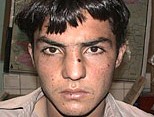
7. Abdul Samad (ISN 911, Afghanistan) Born 1986, seized December 2002 (aged 15/16), released September 2004. One of three (or possibly four) juveniles seized in a raid on a compound owned and run by a warlord named Samoud, who was not captured in the raid (see below for the other two confirmed juveniles). All were treated brutally in a US base in Gardez and at Bagram, where, according to another released prisoner, Habib Rahman, they were abused until they admitted attacking US forces.

9. Naqibullah (ISN 913, Afghanistan) Born 1988, seized December 2002 (aged 13/14), released January 2004. See above.
10. Abdul Qudus (ISN 929, Afghanistan) Born 1988, seized late 2002 (aged 13/14), released April 2005. He said that he was sold to US forces by opportunistic Afghan soldiers, along with Mohammed Ismail (see below), although he was assessed as having been radicalised by local imams.

(iii) The Pakistanis
12. Khalil Rahman Hafez (ISN 301, Pakistan) Born 20 January 1984, seized December 2001 (aged 17), released September 2004. Like many Pakistanis, he had been recruited for jihad against the Northern Alliance and the US in his home country.

14. Saji Ur Rahman (ISN 545, Pakistan) Born 1984, seized December 2001 (aged 16/17, although Rahman himself said he was 15 when captured), released July 2003. He said that he traveled to Afghanistan with two friends to visit shrines in October 2001, but was then captured by Afghans. Perhaps surprisingly, there was no indication that the US authorities didn’t believe his story.
(iv) The Saudis

16. Yasser Talal al-Zahrani (ISN 93, Saudi Arabia) Born 22 September 1984, seized November 2001 (aged 17), died in Guantánamo June 2006. A survivor of the Qala-i-Janghi massacre in northern Afghanistan, he died under mysterious circumstances on the night of 9 June 2006, with two other prisoners, as Scott Horton reported last year for Harper’s Magazine (and see my report and updateshere, here and here).

18. Abdulsalam al-Shehri (ISN 132, Saudi Arabia) Born 14 December 1984, seized November 2001 (aged 17), released June 2006. Like Yasser al-Zahrani, he was a survivor of the Qala-i-Janghi massacre, and, with his cousin, was then held in Sheberghan before ending up in US custody.
19. Ibrahim al-Umar (ISN 585, Saudi Arabia) Born 1985, seized 28 February 2002 (aged 16/17), released May 2003. A student at a religious school in Pakistan, he was encouraged to leave the country after the US-led invasion, but was seized at a checkpoint, held by Pakistan’s notorious ISI (Inter Services Intelligence directorate), and then handed over to US forces.
(v) The others


21. Haji Mohammed Ayub ISN 279, China) Born 15 April 1984, seized December 2001 (aged 17), released May 2006 in Albania. One of 22 Uighurs (Muslims from China’s oppressed Xinjiang province), who were detained by mistake, as they never had any affiliation with either al-Qaeda or the Taliban, and were solely opposed to the Chinese government. For further information, see this McClatchy Newspapers interview from 2008.

The six additional prisoners who may have been under 18 at the time of their capture
23. Qari Esmhatulla (ISN 591, Afghanistan) Born 1984, seized 10 March 2002 (aged 17, or possibly 18), released October 2006. After telling a story in which he claimed to have been set up by Afghan soldiers while returning from a shrine, he was assessed as being “a low-level Taliban recruit.”
24. Hezbullah (ISN 666, Afghanistan) Born 1984, seized April 2002 (aged 17, or possibly 18), released November 2003. A Pakistani by birth who was listed as an Afghan “because that was where he had been living since 1990 and [he] considered that his home,” he was seized with his cousin after he had helped US forces locate and remove suspect items from the home of a suspected insurgent leader.
25. Peta Mohammed (ISN 908, Afghanistan) Born 1985, seized December 2002 (aged 16/17), released March 2004. Do note, however, that, in the documents released by WikiLeaks, his date of birth was recorded as 1984, which, if correct, would mean that he was almost certainly 18 at the time of his capture. If he was under 18, he was one of four juveniles seized in a raid on the compound owned and run by a warlord named Samoud (see Abdul Samad, ISN 911, above).

27. Sultan Ahmad (ISN 842, Pakistan) Born 1 November 1984, probably seized before November 2002 (aged 17), released September 2004. Regarded as deceptive, he said that he was seized after traveling through Afghanistan to try to reach Turkey. The authorities in Guantánamo suspected that he was “an extremist recruit” in his assessment in November 2003, although he was released 10 months later.
28. Shakrukh Hamiduva (ISN 22, Uzbekistan) Born on 13 December 1983, probably seized in November 2001 (aged 17), released September 2009 in Ireland. He stated that he left Uzbekistan because of religious persecution, lived in a refugee camp in Tajikistan for 18 months, and was then taken to Afghanistan with other refugees, where he eventually worked as a taxi driver, which is what he was doing when he was seized. The US authorities, in contrast, regarded him as a Taliban-affiliated fighter with the Islamic Movement of Tajikistan/Uzbekistan.
In addition, there is a remote possibility that four others were under 18 at the time of their capture. The first is Mohammed Ishaq (ISN 20), a Pakistani. Born in 1983, he and a friend traveled to Afghanistan at the start of November 2001 to find his friend’s brother, who had gone to Afghanistan to fight against the Northern Alliance. Sometime in November 2001, he was seized by Northern Alliance forces in Kunduz, but he would only have been 17 at the time of his capture if he was born in late November or December 1983. Similarly, three Saudis — Ali Mohammed Nasir Mohammed (ISN 172), Tariq al-Harbi (ISN 265) and Abdul Khaliq al-Baidhani (ISN 553) — were also born in 1983 and were probably seized in mid-December 2001, meaning that they would only have been under 18 at the time of their capture of they were born in the second half of December 1983.
